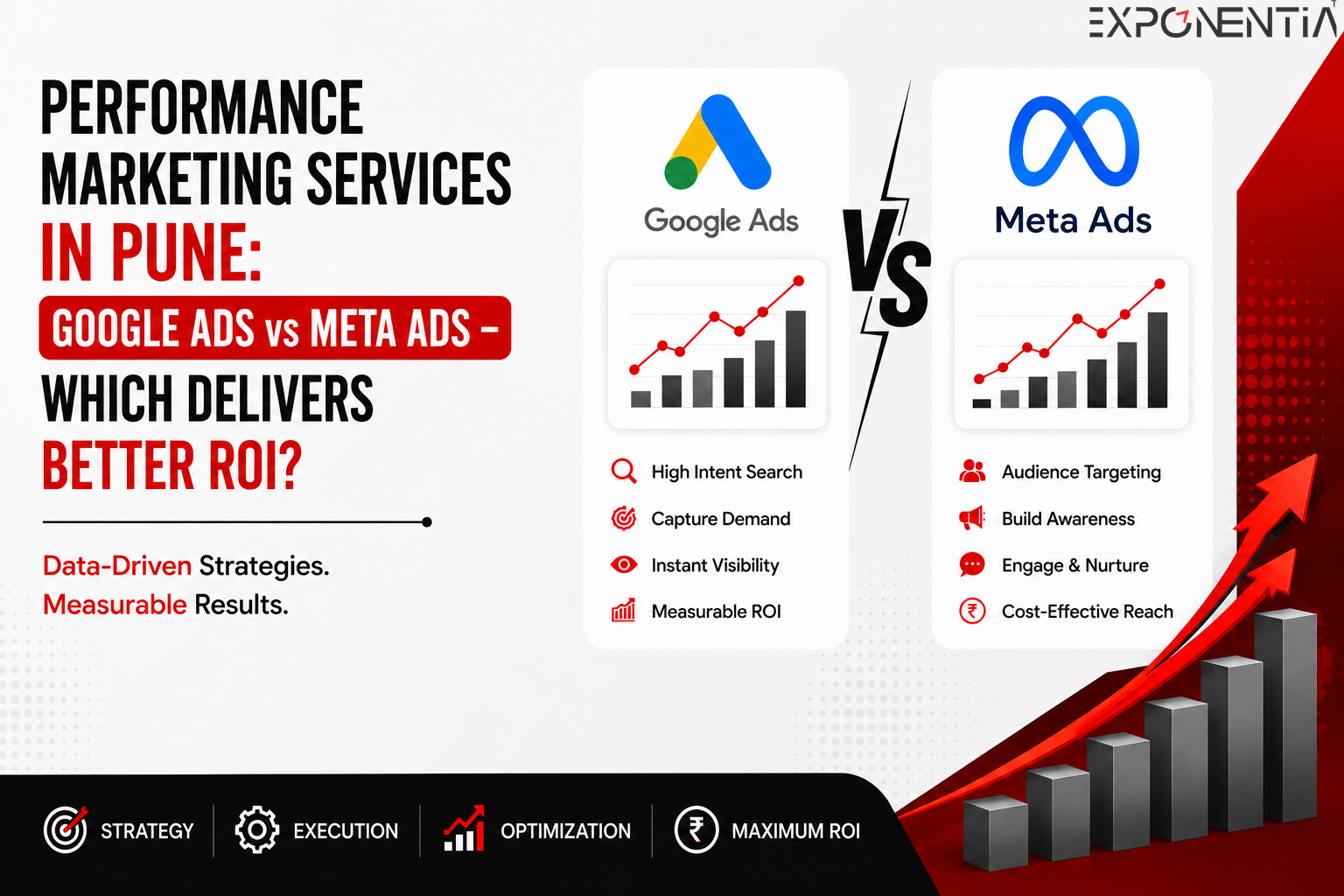
Google Ads has never been a completely static platform. From keyword-based targeting and automated bidding to responsive ads and machine-learning-led campaigns, the platform has continuously changed how businesses reach potential customers.
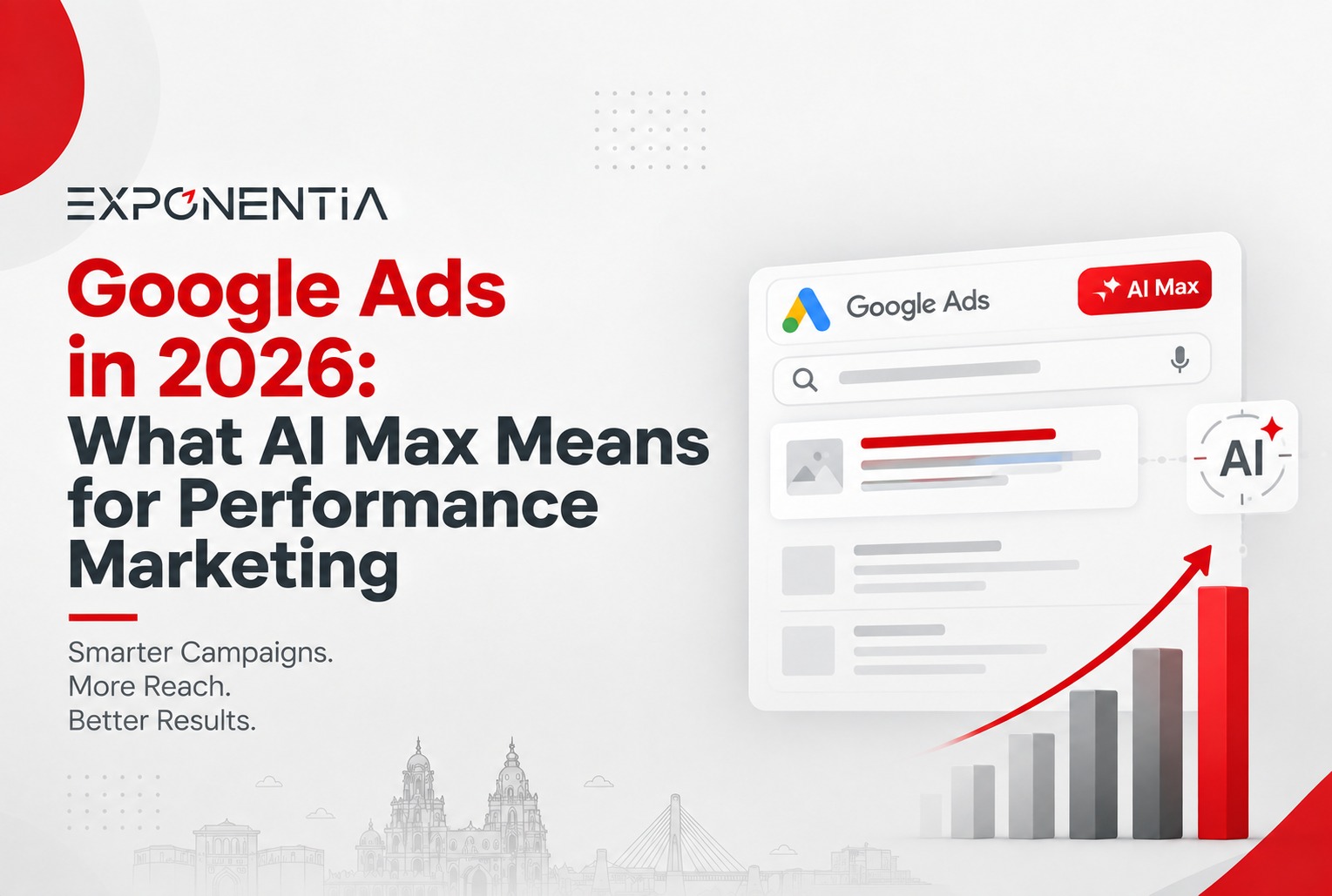
In 2026, that evolution is moving another step forward with AI Max for Search campaigns.
Google is bringing AI deeper into Search by helping campaigns understand search intent, discover relevant queries, adapt ad messaging and identify landing pages that may be more relevant to individual searches. For advertisers, this means the traditional approach of manually controlling every keyword and ad variation is gradually giving way to a more AI-assisted model.
But this doesn’t mean marketers have less to do.
It means the role of performance marketing is changing.
What Exactly Is AI Max?
AI Max is a collection of AI-powered features designed to enhance existing Google Search campaigns. Rather than being a completely separate campaign type, it works as an optimization layer that helps advertisers expand reach and make their campaigns more responsive to user intent.
It can help Google identify relevant searches beyond an advertiser’s existing keyword strategy, customize ad text based on the context of a search and direct users towards relevant pages on a website.
The idea is simple: instead of trying to predict every possible search a customer might make, advertisers can give Google’s AI stronger signals about their business and allow it to identify additional opportunities.
For marketers, this represents a shift from keyword management to intent management.
Search Is Becoming More About Intent
Consider someone looking for a new home in Pune.
They might search for “2 BHK flats in Pune,” “premium apartments near Hinjewadi,” or “ready possession homes in Wakad.” These searches may look different, but they can represent a similar underlying intent.
AI-powered matching allows Google to understand these relationships more effectively.
This creates opportunities for businesses to reach potential customers they may not have specifically anticipated during keyword research.
However, broader reach does not automatically mean better performance.
Campaigns still need relevant messaging, appropriate targeting and regular analysis of the searches and conversions they generate. Automation can identify opportunities, but marketers still need to determine whether those opportunities are valuable.
This is where a Performance Marketing Agency in Pune needs to think beyond simply adding keywords and adjusting bids.
Your Ads Are Only as Good as the Experience Behind Them
AI Max can help adapt ad messaging to different searches, but the customer journey doesn’t end when someone clicks an ad.
Google is also giving AI a greater role in deciding which landing page may be most relevant to a user’s search through features such as Final URL Expansion.
That makes the website an increasingly important part of paid advertising.
A campaign might generate highly relevant traffic, but if the landing page is slow, confusing or doesn’t answer the user’s question, the conversion can still be lost.
This is why performance marketing services in Pune increasingly need to connect advertising with landing-page strategy, website experience and conversion tracking.
The ad gets attention.
The landing page earns the conversion.
The Bigger Problem With Lead Generation
For businesses running lead-generation campaigns, AI-driven targeting creates another important consideration: more leads do not necessarily mean better performance.
Suppose one campaign generates 100 leads at ₹300 per lead, while another generates 50 leads at ₹600 per lead.
Looking only at Cost Per Lead, the first campaign appears more efficient.
But what if only five of those 100 leads are qualified, while 20 of the 50 leads from the second campaign become genuine sales opportunities?
The numbers tell a completely different story.
This is why modern performance marketing needs to look beyond clicks and CPL.
Qualified leads, sales opportunities, site visits, purchases and revenue can provide a much clearer picture of whether advertising is actually working.
For a lead generation agency in Pune, this shift is particularly important. The objective should not simply be to maximise the number of leads. It should be to help businesses generate leads that have a meaningful chance of becoming customers.
What Changes for Performance Marketers?
As Google automates more campaign-level decisions, marketers need to spend less time trying to control every individual setting and more time improving the inputs that influence those decisions.
That means understanding the customer, developing stronger creative, improving landing pages, setting up reliable conversion tracking and analysing what happens after a click.
In other words, the marketer’s role moves from managing every action manually to building the right environment for automation to work effectively.
For a performance marketing company in Pune, this is an important distinction.
AI can process data at scale.
It cannot replace business understanding.
The Future Is AI-Assisted, Not Strategy-Free
AI Max represents a broader change in digital advertising. Google is increasingly using AI to connect user intent with ads, creative and landing pages.
But automation doesn’t remove the need for human strategy.
The quality of the data, messaging, website experience and conversion signals still matters. Businesses that simply switch on AI-powered features without understanding their customers or measuring meaningful outcomes may not get the value they expect.
The real opportunity lies in combining both sides:
AI for scale.
Data for decisions.
Strategy for direction.
As Google Ads becomes more automated in 2026, performance marketing isn’t becoming less important.
It is becoming more strategic.